
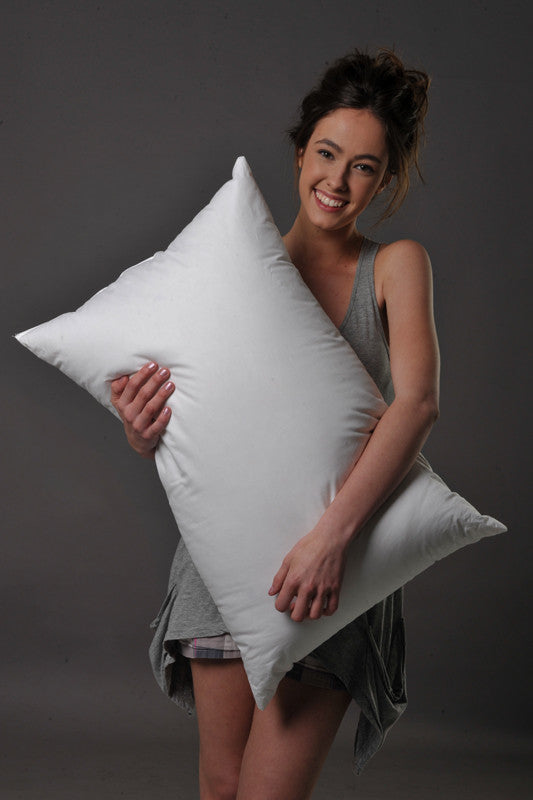


How Often Should I Wash My Goose Down Pillow?
When it comes to managing your head support, your pillow is mechanically different to a quilt because your face rests directly against it for eight hours every single night. It absorbs facial oils, saliva, sweat, and dead skin cells, which can slowly accumulate within the casing. To maintain the structural integrity of the fill and ensure you get the absolute most sleeps out of your investment, you need a clear, technically sound strategy for cleaning and maintenance.
Balancing Hygiene and Longevity
Unlike a heavy winter quilt that only requires a deep wet wash every three to five years, your pillows require a more frequent schedule. As a general rule for high-quality bedding, you should look to wash your goose down pillow every six to twelve months. This timeframe strikes the perfect balance between maintaining clinical hygiene and extending the usable lifespan of the underlying protein clusters.
The secret to extending this timeline and getting thousands of comfortable sleeps out of your pillow lies in prevention. Your first line of defence should always be a high-thread-count, breathable cotton pillow protector. This acts as a physical filter, capturing the vast majority of body oils and moisture before they can migrate through the shell and coat the down clusters inside.
While you should launder your pillowcases and protectors every week or fortnight in hot water, the internal pillow can remain untouched by water for up to a year if properly protected. According to the Sleep Health Foundation, maintaining a comfortable and clean sleep environment is a fundamental pillar of overall sleep hygiene. By minimising the number of times your pillow undergoes a full wet wash cycle, you prevent premature wear and tear on the delicate internal fibres.
Does the Type of Down Matter?
When preparing a maintenance routine, it is essential to ask: does it matter what type of down is in the pillow? The answer is a definitive yes. The biological origin of the fill heavily dictates how well the material can withstand the stress of a washing and drying cycle.
Geese are significantly larger birds than ducks, and because they inhabit colder climates, they grow much larger, stronger, and more resilient down clusters. When premium European goose down clusters are submerged in water, they clump tightly together, but their robust three-dimensional protein structures possess an exceptional memory. Once dried properly, these large clusters bloom back to their original fill power and loft. This structural resilience is why a luxury option can handle periodic laundering for over a decade without failing.
On the other hand, duck down clusters are smaller and have fewer microscopic filaments branching from the central node. This makes duck down pillows slightly more vulnerable to structural fatigue during a mechanical wash cycle. If they are laundered too frequently or subjected to aggressive spin cycles, the fragile filaments can become brittle and fracture into fine dust, permanently flattening the support.
Feather pillows require even greater caution. Feathers possess a hard, central quill that can easily poke through fabric if the shell is stressed or degraded by improper washing techniques. Knowing the precise density and composition of your fill is the first step toward tailoring a safe care routine.
Washing Machine Architecture: Front-Loader vs. Agitator
When the six to twelve month mark arrives and it is time for a deep clean, the machinery you use will dictate whether your pillow survives the process. Under no circumstances should you ever use a standard household top-loading washing machine that features a central plastic agitator column.
Central agitators function by twisting, pulling, and rubbing fabrics to dislodge dirt particles. When a high-loft bedding item is forced into this environment, it inevitably wraps tightly around the agitator spindle. The intense directional forces during the wash and spin cycles place massive mechanical tension on the outer casing and the internal seams. This can tear the down-proof shell, resulting in an expensive, messy explosion of loose down inside your machine.
The only acceptable choice for home or commercial laundering is a high-capacity, front-loading washing machine. Front-loaders utilise gravity rather than an aggressive column, gently dropping the wet pillow through the water as the drum rotates. This provides an incredibly thorough wash while protecting the integrity of the shell. If your home front-loader is too small to allow the pillows to tumble completely freely in pairs, it is highly recommended to take them to a commercial laundromat with spacious industrial drums.
Down-Safe Wash vs. Harsh Detergents
The chemicals you pour into the dispenser drawer are just as critical as the mechanical action of the drum. Most standard household laundry detergents are formulated to be highly aggressive. They are often packed with optical brighteners, bleaching agents, and heavy enzymes designed to break down organic proteins like food stains or grass marks.
Because natural down is an organic protein structure, these standard commercial detergents will aggressively strip away the natural protective lipid coatings inherent to the clusters. Once these protective oils are dissolved, the down filaments lose their signature elasticity. They become dry, brittle, and will snap under the weight of your head, permanently destroying the loft of your pillow.
To safeguard your investment, you must use a specialized, pH-neutral down wash or an exceptionally mild, enzyme-free liquid formula. Furthermore, you must completely avoid the use of fabric softeners. Fabric softeners work by depositing a slick chemical film over textile fibres to make them feel artificially smooth. On down clusters, this chemical coating glues the fine, interlocking filaments together, causing the fill to mat into a dense, non-breathable lump that cannot be salvaged.
The Drying Masterclass: Restoring the Original Bloom
Washing is merely the preparation phase: the actual restoration happens in the dryer. You cannot air-dry a down pillow on a clothesline or an indoor rack. While regular airing in the sunshine is fantastic for releasing daily humidity and killing surface bacteria, a full wet wash requires mechanical intervention. If you attempt to air-dry a soaked pillow, the dense clumps of wet down will trap water in the core for days, creating an ideal breeding ground for mould, mildew, and sour odours that will ruin the item completely.
Washing bedding in water hotter than 60°C will kill dust mites and wash away the allergens they produce, which is highly beneficial for respiratory health. According to the National Asthma Council Australia, hot tumble drying of washed items for ten minutes after they are completely dry will also ensure any remaining mites are eradicated.
To dry your pillow correctly, place it into a mechanical clothes dryer on a low to medium heat setting for several hours. You must introduce three or four clean wool dryer balls or clean tennis balls into the drum. As the machine spins, these balls physically strike the pillow, mechanically breaking up the heavy clumps of wet down and forcing air to circulate through the expanding filaments.
Every thirty minutes, pause the cycle, remove the pillow, and give it a vigorous manual shake to redistribute the internal fill. Only when the pillow feels completely light, weightless, and lacks any solid internal lumps is it safe to return to your bed.
Key Features of a Healthy Pillow Routine
-
Agitator-Free Mechanical Processing
Utilising high-capacity front-loading commercial machinery eliminates the severe directional tension that can tear open down-proof casings.
-
Enzyme-Free Chemical Selection
Employing specialised, pH-neutral down washes preserves the natural protective lipid coatings essential for maintaining cluster elasticity.
-
Driven Ball Agitation Drying
Introducing physical objects like wool dryer balls into a low-heat dryer drum is mandatory to mechanically break up wet clumps and restore original loft.
Frequently Asked Questions
How can I tell if my pillow needs a full wash or just a quick refresh?
If your pillow has lost its spring but has no visible stains, it likely just needs to be aired out or tumbled in a dryer on low heat for ten minutes with a few dryer balls to reset the air pockets. You only need a full wet wash if the casing has absorbed noticeable facial oils or suffered a major liquid spill.
Why does my down pillow smell slightly sour after I washed it at home?
A sour or farm-like aroma is a clear indicator that the core of the pillow is still damp. Down is a natural material, and if it remains wet, bacteria will quickly begin to form. Return the pillow to the dryer immediately with several dryer balls and run it on low heat until the smell completely vanishes.
Can I dry clean my premium pillows to avoid washing them?
Standard dry cleaning is generally not recommended for high-quality down products. The harsh chemical solvents used in dry cleaning facilities can strip away the natural lipid coatings of the down clusters even faster than water, causing the internal structure to become brittle and break down prematurely.
What should I do if a feather or down cluster starts poking through the casing?
Never pull it out of the fabric shell. Pulling a cluster through the fabric will enlarge the microscopic gap in the down-proof weave, creating an open pathway for more fill to leak out over time. Instead, reach from the backside of the pillow and gently pull the cluster back inside, then smooth out the fabric threads with your fingernail.
How do I safely store my spare pillows during the off-season?
Never use plastic bags or vacuum compression packs, as trapping moisture leads to mildew, and long-term compression can snap the delicate filaments. Instead, ensure the pillows are completely dry, fold them loosely, and place them inside a breathable cotton or canvas storage bag on a high shelf in a dry linen closet.
Protect Your Sleep Sanctuary
Your choice of bedding is a direct investment in your daily recovery and physical well-being. By implementing a disciplined, technically accurate cleaning schedule, you protect the microscopic architecture of your down fill while ensuring a sterile, comfortable sleep surface. Take care of your foundations, and they will continue to reward you with pristine comfort for thousands of sleeps to come.
If you are looking to optimise your bedroom arrangement further, explore our comprehensive guides on choosing a pillow and learning how to choose between soft, medium, and firm down pillows to find the perfect anatomical match for your frame. For side sleepers looking for specialised advice, our technical article on the best duck down pillows for side sleepers offers tailored density solutions.
Beyond head support, you can maintain your wider bedding system by reading our expert article on how to refluff your goose down quilt or pillow. To learn more about the scientific protections offered by premium casings, dive into our detailed breakdown: is down hypoallergenic? Shane's guide to respiratory health.
Finally, view our complete collections of luxury foundations, including premium mattress toppers, our international USA Size collection, and our curated menu of elite pillows to elevate your sleep environment today.
How Often Should I Wash My Goose Down Blanket?
How Often Should I Wash My Goose Down Mattress Topper?
Related Posts

Choosing a Cooling Quilt for Australian Summers

Down Quilts: Warmth, Construction and Sizes

Down Quilts: Grades, Warmth And Sizing Explained

How to Choose a Warm Quilt for Your Climate

How to Choose a Pillow: Side, Back & Stomach Sleepers

Responsible Down Standard vs Downpass Compared

Best Goose Down Quilt Australia: Grades & Labels
