

Choosing a Cooling Quilt for Australian Summers
What cooling bedding actually does overnight
Nothing you put on a bed makes cold. A cooling quilt works by letting your body heat and your water vapour escape faster than they build up, and that comes down to three things: how much fill sits over you, how openly the casing is woven, and how much air keeps moving between you and the fabric.
Cooling bedding is usually sold on surface feel, the instant chill when your arm first touches the fabric. That chill is real, and it fades once you have settled in. What decides whether you wake at three in the morning is what the quilt does with heat and sweat for the rest of the night, and a quilt that is too warm for the night doesn't just feel hot, it keeps you from settling.
The specs that predict a cool night
Four numbers get quoted when a cooling quilt is advertised, and they do not all tell you the same thing.
- Surface feel: how cold the fabric reads in the first seconds of touch. It describes first touch only, and no figure on a listing tells you what happens once the bed has warmed up.
- Fill weight, usually in grams: how much insulation is over you. This is the single strongest predictor of being too hot.
- Fill power: how much loft a given weight of down produces. Higher fill power means less weight is needed for the same warmth, so a light quilt can still drape and breathe.
- Thermal resistance, or tog: total insulation of the finished quilt, measured in a lab, which tells you nothing about moisture.
Our own down quilts are rated 1 to 7 blanket warmth rather than by tog, because the number people actually need is how many blankets of warmth they want over them. For summer sleeping, the 1 to 3 band is where to look.
Summer weight down by Australian climate
A summer weight down quilt is a low fill weight under a fine cotton casing. The loft holds the fabric off your skin rather than letting it press flat against you, and the blanket warmth number tells you how much fill is up there, on a scale that runs from 1 to 7.
Which blanket warmth for your climate?
On the humid east coast, where overnight air stays heavy for weeks at a time, the enemy is damp rather than heat, and a light goose down quilt clears vapour better than a heavier one does. A 1 blanket warmth quilt sits at the very bottom of that scale, like our Queen Baffle Boxed, 1 Blanket Warmth, which is cased in fine German Batiste TE100 cotton woven by Weidmann of Germany, the same fabric house that supplies the 380 thread count TE270 Magic Touch casing used on other quilts in the range.
Dry inland summers cool off more after midnight, which is the case for 2 or 3 blanket warmth instead. If you want the absolute minimum weight on the bed, the hand select grade at 900 fill power gives the most loft per gram, as in the Ultra Light Queen, 1 Blanket Warmth. If the budget matters more than the gram count, the light end of the range also comes in 90% White European Duck Down, as in the Queen Duck Down, 2 Blanket Warmth.
How to choose, in order
- Measure the bed, not the mattress label: you want enough overhang that the quilt tucks around you without pulling off your partner.
- Pick the warmth for your worst nights, not your average ones: the hottest fortnight of the year is what you are solving for.
- Choose the construction: a baffle boxed quilt holds loft right to the edge of each box, while a channel quilt lets you shake the down towards your feet or shoulders.
- Choose the down grade last: it sets the price and the weight, not the warmth. The warmth number does that.
Two sleepers, one bed, different warmth
One person comfortable and the other sweating is the problem a single quilt cannot solve. Buying for the hotter sleeper leaves the other one cold, and buying for the average leaves both unhappy.
A two sided quilt solves it properly, with a different fill weight on each half of the same quilt. Our his and hers quilt pairs run 1 and 3, 2 and 4, 3 and 5, 4 and 6, and 5 and 7, so a warm sleeper and a cold one share one bed covering. For summer the lightest pairing is the one to look at. If you are not sure which pairing fits the two of you, contact us and we will work it out from your room and your bed.
Sizing, covers and the layers beneath

Australian and American bed sizes are not the same, which catches people who buy an imported quilt online. A US queen is a different shape from ours, so it sits wrong on the bed and fights the cover. We make both, which is why there is a separate range of US size duvets including the US Queen Comforter, 1 Blanket Warmth for anyone with American bedding or covers.
A quilt cover sits between you and the quilt, so any surface treatment on the quilt itself is irrelevant once the cover is on. And if you are sleeping hot on a foam mattress or a thick foam topper, the heat is coming from underneath you, and no change of quilt fixes that. If that is your bed, a down mattress topper is the swap worth making before you spend anything more on the quilt, because a down layer between you and the foam puts a breathable surface over a base that holds heat.
Fill claims, labels and what regulators require
What a care label has to say
Any quilt sold new here has to carry care instructions. Under the Consumer Goods (Care Labelling) Information Standard 2023, a mandatory information standard under the Australian Consumer Law, bedding and household textiles including quilts and pillows must carry adequate care instructions in accordance with AS/NZS 1957:1998, published by Standards Australia, or ISO 3758:2012. The ACCC administers and enforces that standard, and there are penalties for supplying textile products that don't comply.
Can a "100% down" claim be trusted?
Content claims are held to a harder test. A fill content claim like "100% down" is a representation under the Australian Consumer Law's prohibitions on false or misleading conduct. Quilts sold as 100% goose down have tested at 71 to 76% in one matter and at 70 to 86% in another, and reliance on the percentage tolerances in AS 2479-2007, Down and/or feather filling materials and filled products, published by Standards Australia, was rejected as a justification for the claim. Both are recorded as section 87B undertakings on the ACCC's public register, and in another matter a supplier undertook to make no down content claim unless independent testing of the finished product supports it, which is the same evidentiary bar a cooling or breathability claim has to clear. Our quilts name the down grade they are filled with on the listing itself, 90% or 95% or the hand select grades.
So when a cooling quilt is advertised to you, ask for the three things anyone can actually check: the fill weight, the blanket warmth number, and what the casing is woven from. If none of those are stated anywhere on the listing, the cooling claim has nothing behind it. We answer the equivalent question about our own down with paperwork. Every shipment we import arrives with a Veterinary Health Certificate showing the down free of avian flu and other known diseases and sterilised to strict Australian standards, and we will always provide them, including the March 2024 and April 2025 certificates.
One distinction worth drawing: if a cooling product has a fan, a pump or a powered pad in it, it is not simply a textile, and it is a different kind of purchase from a quilt. Electrically heated and temperature controlled blankets, pads and bed warmers are covered by AS/NZS 60335.2.17:2023, published by Standards Australia and Standards New Zealand on 1 December 2023, with the 2012 edition remaining current during the transition. Everything we make is a down filled textile with no powered parts, so fill weight, casing and loft are the whole story.
Washing, drying and years of service
Light summer quilts get used in the sweatiest weeks of the year, so care matters more here than it does in winter. We recommend washing a quilt every three to five years and a pillow every six to twelve months, and our care instructions for down quilts set out the method. Skip the fabric softener, and keep the dryer off high heat.
Looked after that way, a premium European goose down quilt comfortably lasts between ten and fifteen years, which is the honest way to read the price. Everything is handcrafted at our workshop in Para Hills West, South Australia, and we deliver free Australia wide and to the United States, Canada, New Zealand, Japan and Singapore. Tariff free for all USA customers!
Frequently asked questions
Can a summer weight quilt be used in winter?
In a heated bedroom, a 2 or 3 blanket warmth quilt is usable year round. In an unheated room through a cold winter it won't be enough, which is why a light quilt plus a 5 to 7 for the cold months beats compromising with one middle weight.
Will a quilt cover stop the quilt breathing?
A cover adds a layer, so choose it as carefully as the quilt. A fine, openly woven cotton or linen cover lets vapour through, while a heavier, more tightly woven one holds more of your heat in.
Do pillows matter if you sleep hot?
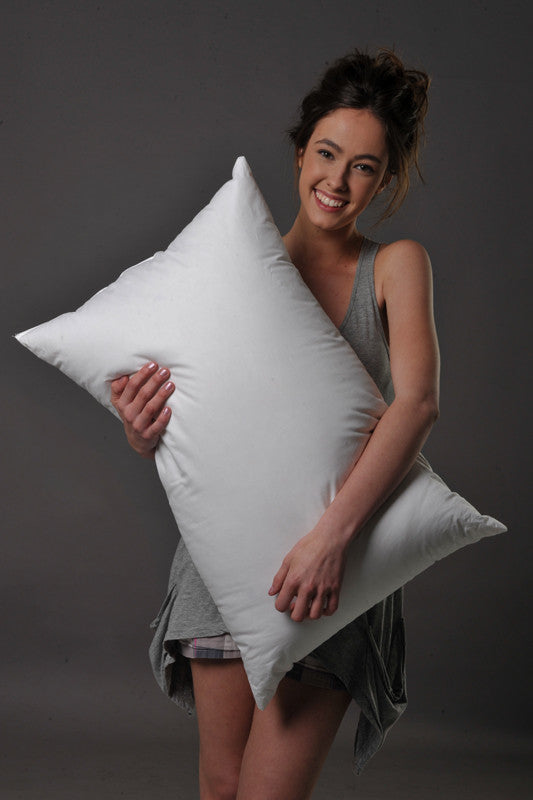
They do. A pillow sits against your head all night and takes more sweat than anything else on the bed. Density comes from how much filling is used rather than the type of down, so a goose down pillow in a soft density has less of it under you than a firm one, and pillows need washing far more often than quilts do.
Which is cooler, goose down or duck down?
Neither, at the same warmth rating. The warmth number is what to compare, because our 1 to 7 scale runs across every down grade we fill with. Higher grade goose down reaches a given warmth with less weight on you, because the higher fill power needs less filling for the same loft.
Related Posts

Down Quilts: Warmth, Construction and Sizes

Down Quilts: Grades, Warmth And Sizing Explained

How to Choose a Warm Quilt for Your Climate

How to Choose a Pillow: Side, Back & Stomach Sleepers

Responsible Down Standard vs Downpass Compared

Best Goose Down Quilt Australia: Grades & Labels
